Manufacturing and industrial industries in the UAE have been increasing in the last few years, and look set to continue into 2025 and beyond. Supporting these businesses is automation, and smoother operating processes. In this article we look at how these industrial automation tools have been impacting the UAE, why automation is going to continue to be an important factor in the market, and the key benefits of bringing automation into your industrial UAE business.
(more…)"AI is not here to replace jobs it’s here to remove tasks, so your teams can focus on growth." — Satya Nadella, CEO Microsoft
(more…)Bringing your business into the digital world means being aware of a lot of different terms, technologies, and possible options for your company. Business automation and Customer Relationship Management (CRM) software are often spoken about together, but are they actually the same thing, or separate technologies that you need to know about. Today we are going to look at what CRM and Business Automation (also known as Business Process Automation or BPA) actually are, how they compare if you were to look at having one or the other, and the key benefits that come from utilising both.
(more…)Keeping track of stock is an essential part of any business, but for hand and power tools manufacturing, this can be made even more difficult by the sheer number of variations, sizes, and models of individual items, all of which have to be monitored, managed, and up-to-date in systems that may be further complicated by selling direct to consumers or in wholesale agreements to retailers, and have to be monitored in multiple areas of a management system. In this article, we will look at some of the key challenges manufacturers face for stock and inventory management, how these problems may occur, and what sort of software and automation that can help to resolve these issues.
(more…)Customer Relationship Management (CRM) software can be an incredibly powerful business tool – and the best CRM can bring about massive benefits, but only when it is understood, installed correctly, and used properly. For many companies, CRM software is too complex, not intuitive, and not used as a result. Today we take a look at CRM usage in Dubai and the UAE, the problems that a lot of the available CRM solutions have in common, and why you need to do your research to benefit from a simple CRM game changing solution for your business.
(more…)Increasing your sales and ensuring the continual growth of your business is a key concern, and having the right sales strategies in place can make a game changing difference when it comes to your operations.
In this article we are going to take an in depth look at sales strategies – the challenges you may face in growing sales, how to calculate your sales growth, what the best sales strategies are set to be in 2025, and what technology you need to make this happen.
(more…)Digital transformation plays a critical role in enhancing patient care, operational efficiency, and business growth. Traditionally, Electronic Health Records (EHR) have been the backbone of healthcare technology, ensuring accurate patient records and compliance. However, as we enter 2025, Customer Relationship Management (CRM) systems are emerging as a game-changer for healthcare providers looking to improve patient engagement, streamline processes, and drive revenue growth.
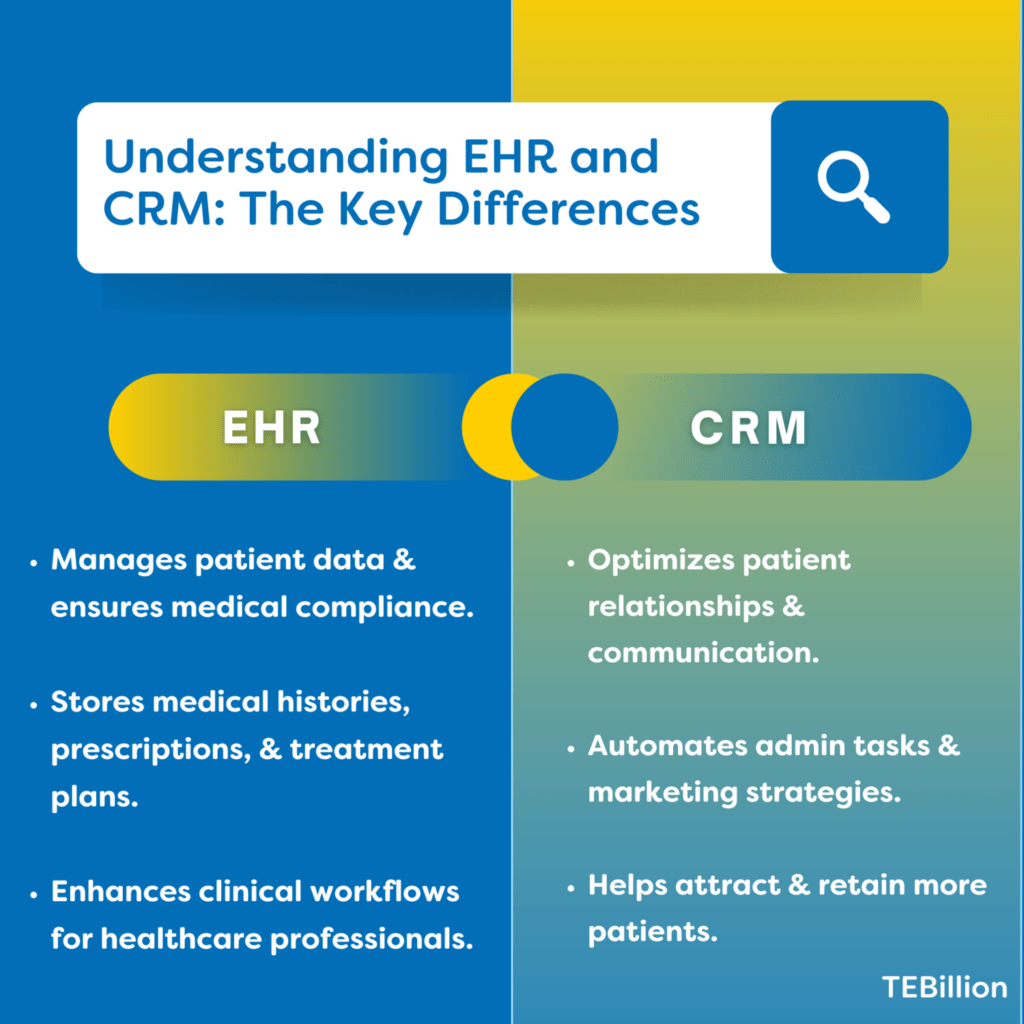
EHR (Electronic Health Records): primarily focus on managing patient data, ensuring compliance with medical standards, and improving clinical workflows. These systems store medical histories, prescriptions, test results, and treatment plans, making them essential for healthcare professionals.
CRM (Customer Relationship Management): on the other hand, is designed to optimize relationships with patients, streamline communication, and enhance overall customer experience. A healthcare CRM integrates patient interactions, automates administrative tasks, and improves marketing strategies to attract and retain more patients.
As healthcare businesses face increased competition and rising patient expectations, the need for a CRM system is becoming more evident. Here are some key reasons why 2025 is the year healthcare providers should prioritize CRM adoption:
1. Enhancing Patient Engagement and Retention
Patients expect a seamless, personalized experience when interacting with healthcare providers. A CRM helps build better relationships by automating appointment reminders, follow-ups, and customized health-related communications. This proactive approach leads to increased patient satisfaction and long-term loyalty.
2. Data-Driven Decision Making
Unlike EHRs that primarily store medical data, a CRM provides insights into patient behaviour, preferences, and interactions. With AI-powered analytics, healthcare providers can make data-driven decisions, improve service offerings, and optimize marketing efforts to attract new patients.
3. Streamlining Operations and Reducing Costs
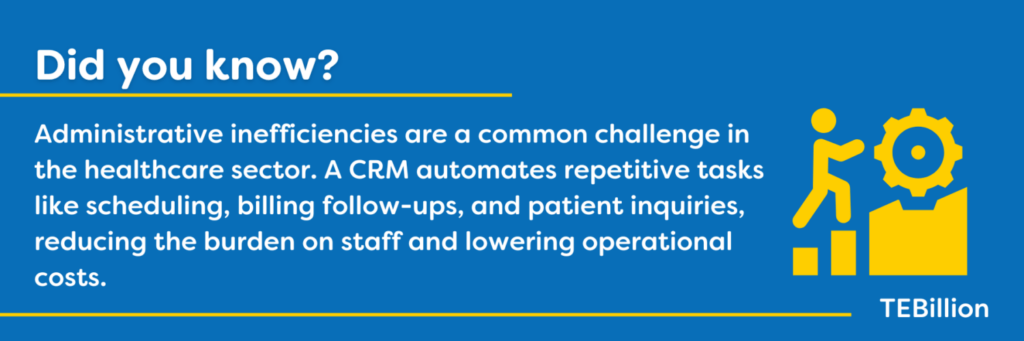
Administrative inefficiencies are a common challenge in the healthcare sector. A CRM automates repetitive tasks like scheduling, billing follow-ups, and patient inquiries, reducing the burden on staff and lowering operational costs. This automation ensures healthcare professionals can focus more on patient care rather than manual processes.
4. Improved Communication and Coordination
A CRM integrates multiple touchpoints, ensuring seamless communication between healthcare teams and patients. Whether it's through email, SMS, or AI-powered chatbots, a CRM ensures that all patient interactions are tracked and managed efficiently, reducing gaps in communication.
5. Regulatory Compliance and Security
Modern CRMs are designed with compliance in mind, ensuring that patient data is securely managed and meets healthcare regulations. With robust encryption and access control features, CRMs provide a secure environment for storing sensitive patient information.
While EHRs remain essential for managing clinical data, integrating a CRM allows healthcare providers to expand beyond traditional record-keeping and focus on patient engagement, retention, and business growth. By leveraging a CRM alongside an EHR, healthcare organizations can achieve a comprehensive digital strategy that enhances both patient care and operational efficiency.
Not all CRMs are built the same, healthcare providers must look for a CRM that offers:
In 2025, healthcare providers can’t afford to rely solely on EHRs. The demand for personalized care, seamless communication, and operational efficiency is higher than ever, and that’s where a powerful CRM comes in. TEB is redefining healthcare management with cutting-edge automation, intuitive data centralization, and efficiency-driven features, all wrapped in a sleek, user-friendly design.
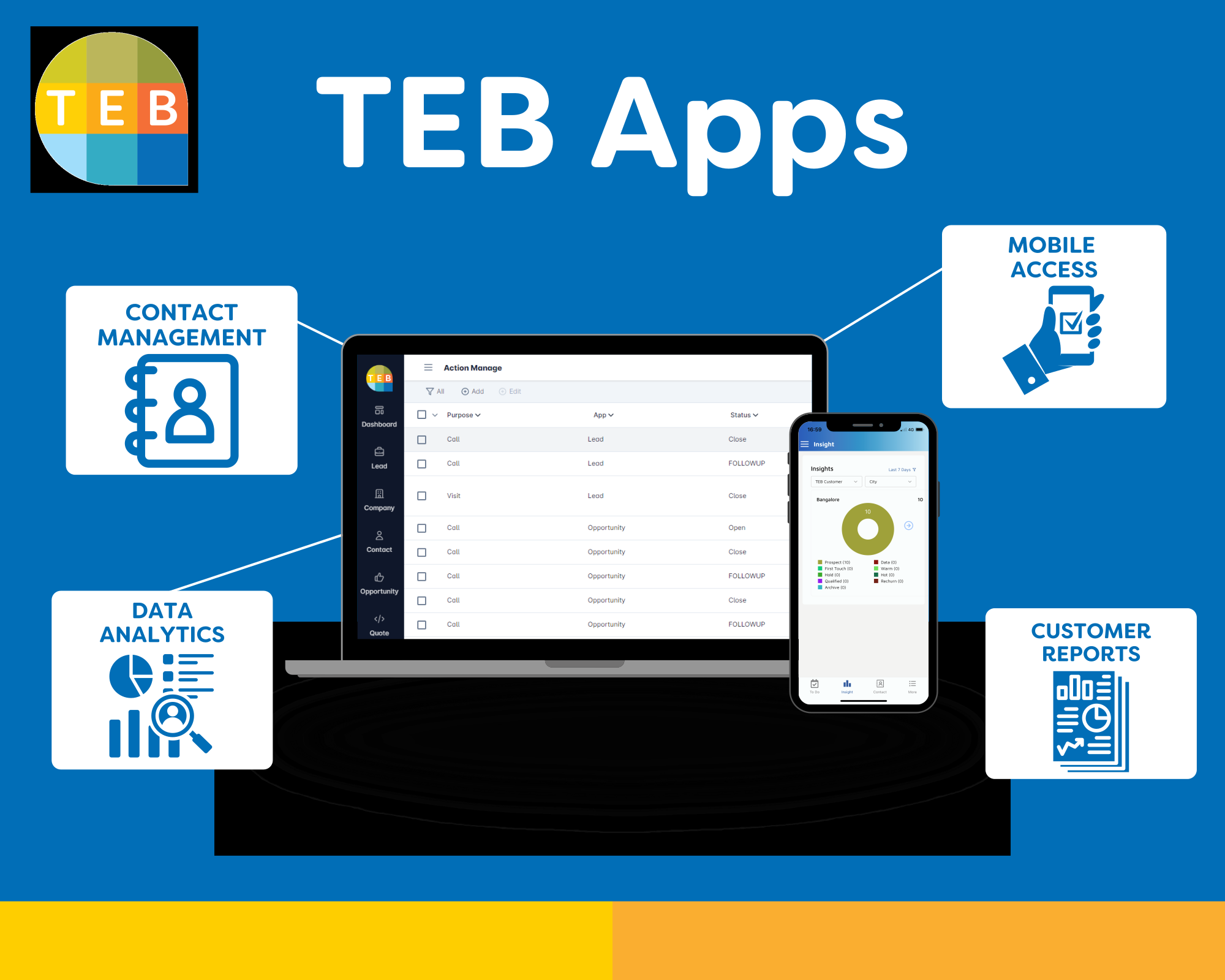
Ready to elevate patient engagement and streamline your operations? Learn more about how TEB can transform your healthcare business today.

The medical technology industry is a niche governed by strict regulations, data protection requirements, and legal obligations to keep customer information from being mishandled. Despite these restrictions, the use of business data in this industry is incredibly valuable and can make a wide-reaching positive impact across the company when done correctly. In this article, we take a brief look at the current position of the medical technology industry, the challenges that come from managing large volumes of data, and what technology can help to handle it.
(more…)